 On Friday, June 23, 1972, President Richard Nixon signed the measure known as Title IX into law. While many people associate the law with athletics, sports were barely mentioned in committee discussions about the measure.
When Indiana Sen. Birch Bayh introduced the legislation in 1971, he said, in part, “It is not a panacea. It is, however, an important first step in the effort to provide for the women of America something that is rightfully theirs: an equal chance to attend the schools of their choice, to develop the skills they want and to apply those skills with the knowledge that they will have a fair chance to secure the jobs of their choice with equal pay for equal work.”
As we know now, Title IX has come to mean so much more, including a dramatic impact on women’s athletics.
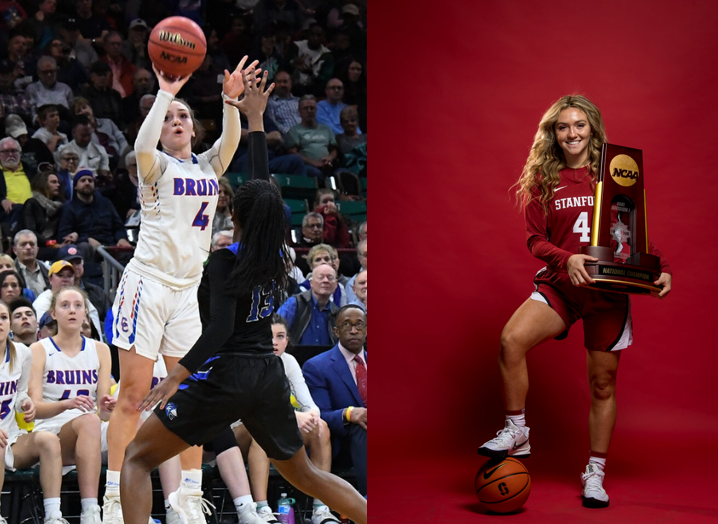
On April 1, 2022, another Friday, fifty years later, former Cherry Creek High School basketball star Jana Van Gytenbeek was at the Final Four, watching her Stanford teammates take on the University of Connecticut. The 2022 Final Four at the Target Center in Minneapolis had gone as planned for the Stanford Cardinal, until they faced UConn. In front of a national television audience, the Huskies prevailed 63-58, ending Stanford’s season. Two nights later, UConn advanced to the National Championship game and lost to champion South Carolina.
For Van Gytenbeek, finishing her sophomore season, playing for Stanford and making it to the Final Four is something she doesn’t take for granted.
“I’m all about supporting women, and the best way I can do that is to honor those who blazed that trail before me. They inspire me and give me hope,” she said. “They are why I can have a voice, and the courage to have a voice, because someone did it before me.”
Title IX has had a dramatic impact on women’s – and men’s – athletics since its inception half a century ago, from increased opportunities for girls and women at all educational levels, access to more career choices and yes, increased access to activities on the field, court, ice, mat and in the pool.
The law’s impact varies, and different people have different stories about how increased opportunities, especially in athletics, dramatically changed their lives.
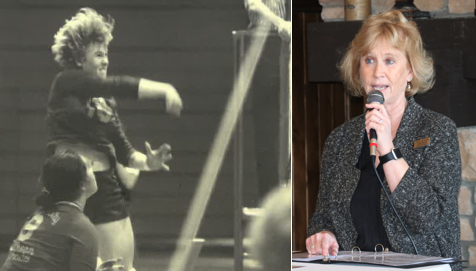
In 1998, the Cherry Creek School District hired its first female athletic director, Carla Stearns, who took the position at the newly opened Grandview High School. She graduated from Thomas Jefferson High School and went on to the University of Northern Colorado in 1978, just six years after Title IX became law.
“I know women who were older than me, who were fantastic athletes, who didn’t have the opportunities that I did,” Stearns said. “I was lucky enough to be able to compete. I don’t know where I would be without that opportunity to participate in sports.”
Stearns was a two-sport athlete for the Bears.
“I played volleyball and softball and I got a full-ride scholarship, which was pretty special for a woman back then,” she said. “Being able to have those opportunities was life-changing for me, and I don’t know what I would have done in my life had I not had that opportunity. You know, growing up I didn’t have any youth programs when I learned to play volleyball. I had to play with adult women most of the time.”
In 2019, Tanya Bond was named co-athletic director at Eaglecrest High School. Bond, born in Arvada, went to Arvada High School and played volleyball, basketball and ran track, graduating in 1993. She was recruited by Western State to play volleyball and she also threw the javelin for track and field. She graduated in 1997 and she believes Title IX had a dramatic effect on her journey.
“Absolutely. I’m sitting in the second-largest high school in Colorado as an athletic director, and if it weren’t for Title IX, back before I was even born, I wouldn’t have this opportunity,” she said. “Opportunity is what it’s really all about.”
Bond explained that her own family would have benefited from Title IX.
“My mom, my grandmother, who had an interest in doing all these things, weren’t even allowed or afforded those opportunities.”
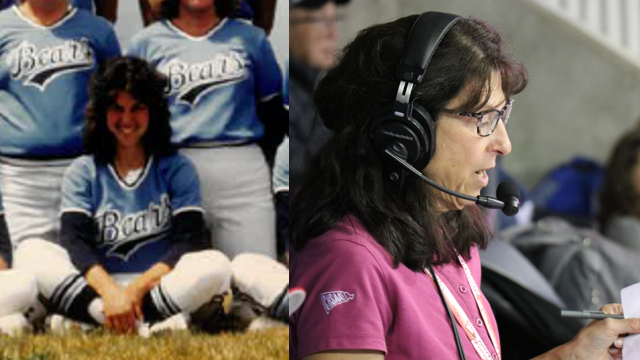
Another Northern Colorado graduate and a softball teammate of Stearns, Mary Kay Mauro (Class of 1984) lettered in softball for the Bears all four years. She now does play-by-play and analysis for women’s high school and college sports.
“I am so blessed to have benefitted from Title IX,” she said. “I have not known sports without it and I was fortunate to have opportunities.”
However, there were still challenges, she said.
“I remember during my playing days at UNC from 1980 to 1984, I went and got a Colorado Class C Chauffer’s license so that I could drive this oversized station wagon to get the team to and from games, many of which were out of state,” she remembered. “It was me and my co-captain who traded off driving duties because there wasn’t much money for transportation during those years.
“We did get new uniforms each year, but up through 1978, the softball team had to share jerseys with the women’s basketball team,” Mauro added. “They had the shorts, and softball had the pants, but they had to share jerseys.”
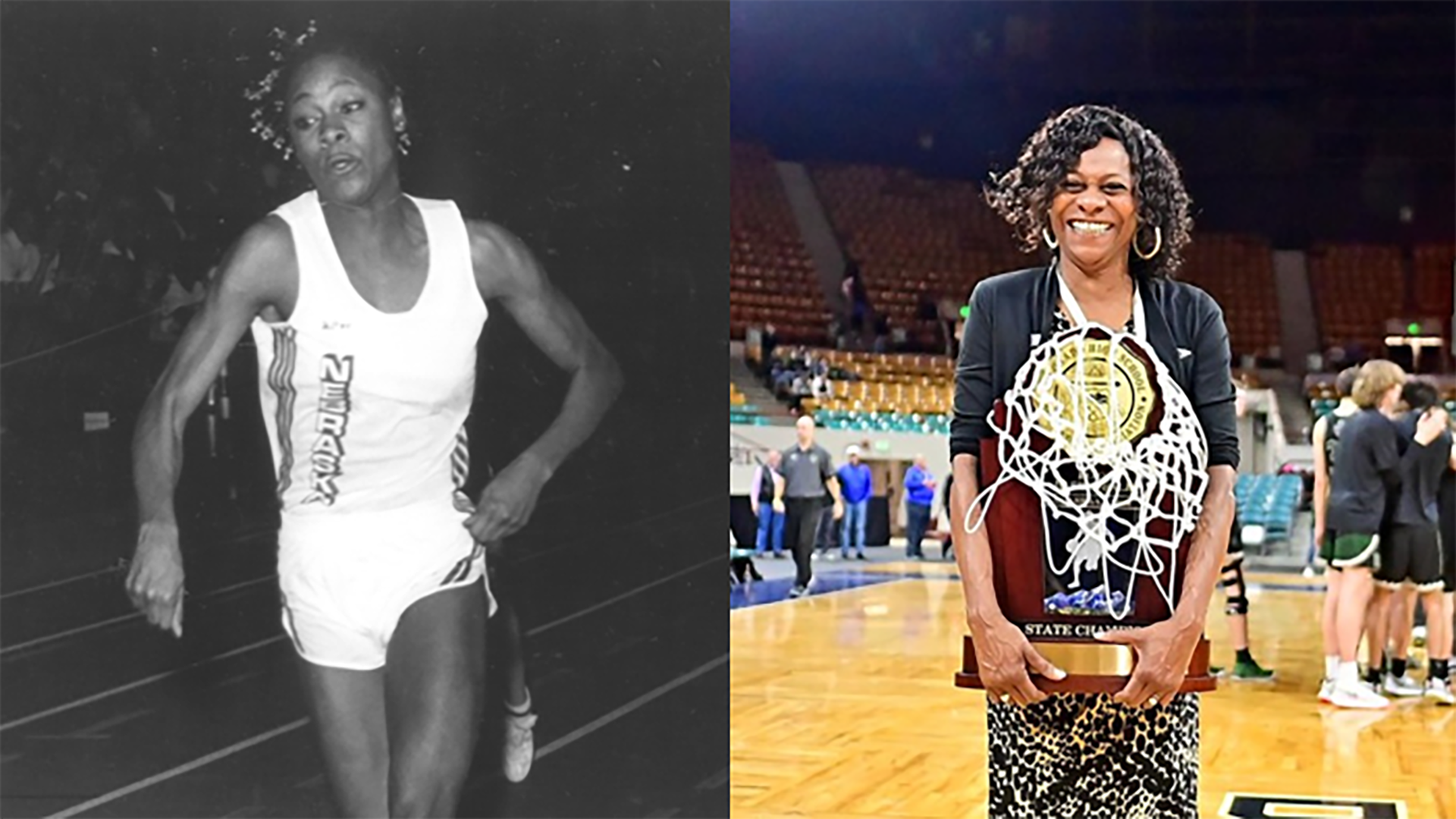
Colorado High School Activities Association (CHSAA) Commissioner Rhonda Blanford-Green takes more of a world view of Title IX’s impact. A graduate of Aurora Central High School and the University of Nebraska, (Class of 1985), Blanford-Green was an All-American in track and was named to the University of Nebraska Athletic Hall of Fame in 2019.
“I think often that Title IX is associated with women, but when you talk about the bigger picture, it was men and women who came together to recognize that inclusion and diversity mattered, and equity and opportunities mattered,” she said.
Blanford-Green said that she was fortunate to go to a college with more progressive ideas when it came to women’s athletics. She said having a nationally prominent football program also helped.
“I went to a school that was very well taken care of in terms of equity, due in large part to our football team’s visibility,” she said. “We were given a training table, all of our track and field uniforms were washed and folded and readied prior to our road trips. Two girls to a room instead of four. We had meal money that was equitable to what male athletes received.”
She too said that those who came before her were instrumental in her ability to participate.
“I was lucky enough (when I competed) to stand on the shoulders of many women who chipped away at those barriers. So when it was my time, it was less challenging, because they fought to widen those opportunities,” she said.
All of these women – the association leader, the barrier-breaking athletic directors, the broadcaster and the college basketball player – say there is more work to be done.
“I think it’s so important historically for all female athletes,” CHSAA Commissioner Blanford-Green said. “When you haven’t had to fight those battles, you think that it is the way it has always been. In our country, we wait for a 50th anniversary, or a 40th or the 100th, and then we bombard people with all this information, when in fact it should be ingrained, so that these kids know that our current situation did not come easily, and we shouldn’t take it for granted.”
Former athletic director Carla Stearns agrees.
“The battle is not over,” she said, pointing to a story that came out last year concerning inequity in the Final Four men’s and women’s weight rooms. “I think things have changed this year, but when the teams showed up, the men had a huge weight room at the venue (in Indianapolis) and the women had just a few barbells at theirs (in San Antonio). That’s ridiculous in 2021!”
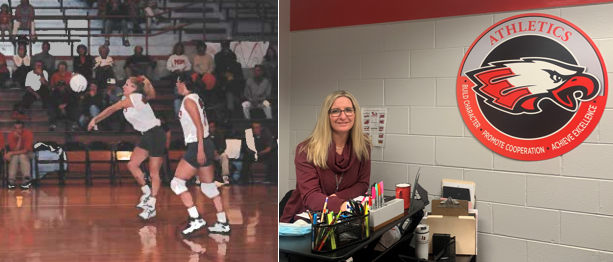
Eaglecrest Co-Athletic Director Tanya Bond wants the concepts of Title IX to resonate with today’s high school, college and professional female athletes.
“I want today’s female athletes to know about Title IX so they can honor the women – the people – who have done the work in the past,” she said. “I want them to realize that before Title IX, the opportunities for girls weren’t there, and for that reason, that today’s girls will continually stand up for what they believe in.”
Broadcaster Mary Kay Mauro said objections to Title IX are still always present.
“It’s so neat to see how things have improved,” she said. “But let’s not forget how Title IX is still being challenged today.”
Meanwhile, partly because of Title IX, Jana Van Gytenbeek continues living her dream as a collegiate athlete at Stanford.
“It’s incredible that I’m a woman and that I’m successful in what I’ve done – through hard work to be sure – but I know a lot of people who haven’t had the same opportunities that I’ve had,” she said. “I’m grateful Title IX is a thing that keeps us going. I’m so lucky, but we all deserve it.”